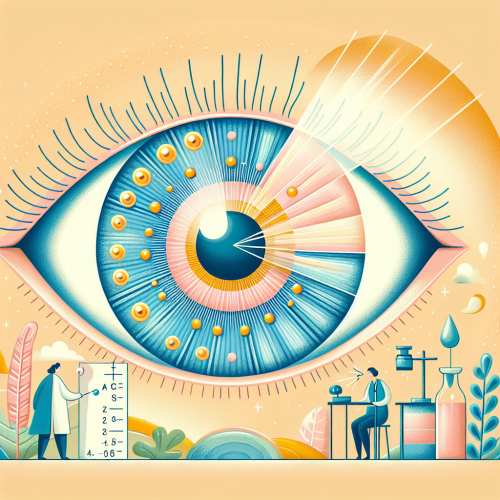
The purpose of this learning experience is to engage 3rd-grade students in a dynamic exploration of how the human eye interacts with light, fostering a deeper understanding of the scientific principles behind vision. Through hands-on activities, creative projects, and collaborative discussions, students will develop critical thinking and problem-solving skills while connecting scientific concepts to everyday life. By integrating art, music, and storytelling, the project aims to cultivate an appreciation for interdisciplinary learning and enhance students' ability to communicate their findings effectively.
Learning goals
Students will develop an understanding of the eye's anatomy, particularly the iris, and its role in light regulation. They will explore the relationship between light and vision through hands-on activities and collaborative discussions. Students will enhance their critical thinking by analyzing and documenting how varying lighting conditions impact their vision. They will practice effective communication by presenting their findings and engaging with peers and visitors during the gallery walk. Additionally, students will cultivate self-directed learning by using feedback to refine their observations and presentations.
Standards
[National Core Arts Standards] MU:Cn11.1.3.a - Demonstrate understanding of relationships between music and the other arts, other disciplines, varied contexts, and daily life.
[Common Core] CCSS.ELA-Literacy.CCRA.R.6 - Assess how point of view or purpose shapes the content and style of a text.
[National Council for the Social Studies] D1.1.3-5 - Explain why compelling questions are important to others (e.g., peers, adults).
[Next Generation Science Standards] 3-5.AG.4.2 - A system can be described in terms of its components and their interactions.
[National Core Arts Standards] DA:Pr4.1.3.b - Fulfill specified duration of time with improvised locomotor and non-locomotor movements. Differentiate between “in time” and “out of time” to music. Perform movements that are the same or of a different time orientation to accompaniment. Use metric and kinesthetic phrasing.
Competencies
Self Directed Learning - Students use teacher and peer feedback and self-reflection to monitor and direct their own learning while building self knowledge both in and out of the classroom.
Academic Mindset - Students establish a sense of place, identity, and belonging to increase self-efficacy while engaging in critical reflection and action.
Critical Thinking & Problem Solving - Students consider a variety of innovative approaches to address and understand complex questions that are authentic and important to their communities.
Content Expertise - Students develop key competencies, skills, and dispositions with ample opportunities to apply knowledge and engage in work that matters to them.
Effective Communication - Students practice listening to understand, communicating with empathy, and share their learning through exhibiting, presenting and reflecting on their work.
Products
Students will create interactive posters that illustrate the process of light entering the eye and the iris's response, using flaps or sliders to reveal additional information. They will also develop a story or comic strip that narrates the journey of light into the eye, integrating scientific vocabulary and concepts. These products will be showcased during the 'Vision Quest' gallery walk, where students will engage visitors in discussions and answer questions about their work.
Launch
Transform the classroom into a dynamic 'Light Maze,' where students embark on an exploratory journey through stations simulating various lighting conditions. At each station, students observe and record how their eyes adjust, noting changes in pupil size and light perception. This immersive experience sets the stage for curiosity-driven inquiry, encouraging students to ask questions and make predictions about the eye's response to light.
Exhibition
Plan a 'Vision Quest' gallery walk where students display their annotated visual journals and engage visitors in discussions about their findings and the essential question. Encourage guests to ask questions and share their thoughts, fostering a collaborative learning environment. Students will also present their interactive posters, demonstrating the process of light entering the eye and the iris's response, and guide visitors through their crafted Light Maze, explaining their observations and insights.