2nd Grade  Project 2 weeks

"Pollinator Pals: Buzzing Into Books!"

Alexa H
RI.2.3
2-PS1-1
P.CT.C4.A
Critical Thinker
Effective Communicator
1-pager

Purpose

The purpose of this project is to engage second-grade students in a hands-on exploration of pollinators and their vital role in plant growth and food production. Through interactive activities with community partners, students will deepen their understanding of scientific concepts related to pollination and develop critical thinking and communication skills. By observing, reflecting, and sharing their findings, students will connect scientific ideas with real-world applications, fostering curiosity and appreciation for the natural world.

Learning goals

Students will understand the role of pollinators in plant growth and food production by observing and interacting with real-world examples. They will develop critical thinking skills by analyzing the characteristics and behaviors of different pollinators and their impact on the environment. Students will enhance their communication skills by sharing their findings and insights through creative presentations and performances. They will apply scientific investigation techniques to classify pollinators and describe their observable properties. Through reflection and collaboration, students will draw connections between scientific concepts and their everyday experiences.
Standards
  • [Kentucky] RI.2.3 - Describe the connection between individuals, historical events, scientific ideas or concepts or steps in technical procedures over the course of a text.
  • [Kentucky] 2-PS1-1 - Plan and conduct an investigation to describe and classify different kinds of materials by their observable properties.
  • [Kentucky] P.CT.C4.A - With prompting and support, use appropriate organizational patterns (chronological order, compare/contrast, problem/solution, etc.) and/or technology tools to organize information and draw conclusions.
Competencies
  • Critical Thinker - Thinks deeply and makes informed decisions to create solutions or new understanding supported by relevant and reliable evidence.
  • Effective Communicator - Engages diverse audiences respectfully by exchanging ideas and information responsibly, listening actively, speaking and writing clearly, and using print and digital media appropriately.

Products

Throughout this learning experience, students will create a variety of products, including a reflection journal with drawings and written entries about their observations and learning. They will also design and craft costumes and props for the 'Pollinator Parade,' showcasing their understanding of different pollinators. By the end of the project, students will collaboratively produce a group presentation or skit, complete with visuals, to effectively communicate the pollination process and the significance of pollinators to their peers and the visiting beekeeper.

Launch

Kick off the learning experience with a 'Pollinator Discovery Day' where students embark on a guided exploration of a local garden or park. During this exploration, students will observe various pollinators in action, taking notes and sketching their observations. This hands-on activity will ignite curiosity and set the stage for deeper inquiry into the role of pollinators in our ecosystem.

Exhibition

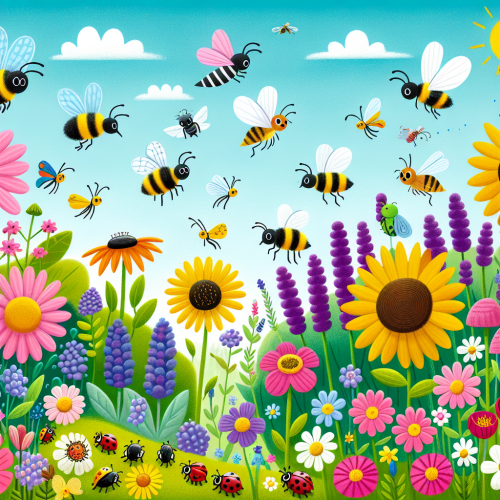
Students will participate in a 'Pollinator Parade' where they dress up as their chosen pollinator, such as bees, butterflies, or hummingbirds. During the parade, they will share interesting facts and stories about their pollinator with other classes and parents. This event allows students to creatively express their learning and engage the school community in understanding the vital role of pollinators in our ecosystem.