3rd, 4th, 5th Grades  Project 12 weeks

Civic Lens: Capture & Report!

IRecanatini
D2.Civ.7.3-5
Self Directed Learning
Academic Mindset
Critical Thinking & Problem Solving
Content Expertise
+ 2 more
1-pager

Purpose

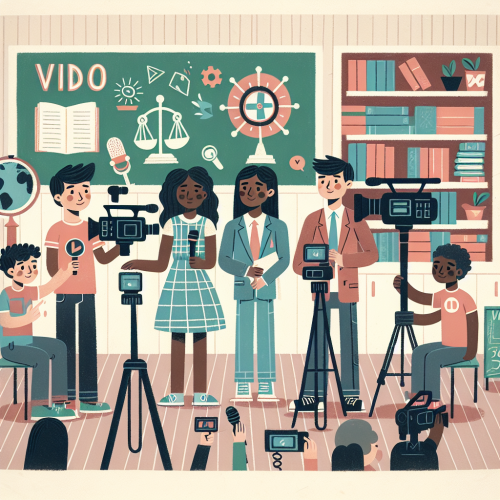
Students will engage in a video journalism project to explore and document civic virtues and democratic principles within their school and community. Through collaborative efforts, students will co-design and produce video reports that address real-world issues, fostering critical thinking and problem-solving skills. This project will enhance students' self-directed learning and academic mindset by encouraging them to reflect on their identity and place within the community. By practicing effective communication and collaboration, students will share their insights and stories, promoting positive change and understanding in their local environment.

Learning goals

Students will develop skills in video journalism by researching, scripting, filming, and editing video reports that address civic issues relevant to their community. They will practice self-directed learning by using feedback and reflection to refine their projects, enhancing their understanding of civic virtues and democratic principles. Through collaboration, students will co-design their reports, engage in shared decision-making, and assume leadership roles. They will enhance their critical thinking by exploring innovative approaches to storytelling and problem-solving, while effective communication will be emphasized through presenting and reflecting on their work.
Standards
  • [National Council for the Social Studies] D2.Civ.7.3-5 - Apply civic virtues and democratic principles in school settings.
Competencies
  • Self Directed Learning - Students use teacher and peer feedback and self-reflection to monitor and direct their own learning while building self knowledge both in and out of the classroom.
  • Academic Mindset - Students establish a sense of place, identity, and belonging to increase self-efficacy while engaging in critical reflection and action.
  • Critical Thinking & Problem Solving - Students consider a variety of innovative approaches to address and understand complex questions that are authentic and important to their communities.
  • Content Expertise - Students develop key competencies, skills, and dispositions with ample opportunities to apply knowledge and engage in work that matters to them.
  • Effective Communication - Students practice listening to understand, communicating with empathy, and share their learning through exhibiting, presenting and reflecting on their work.
  • Collaboration - Students co-design projects with peers, exercise shared-decision making, strengthen relational agency, resolve conflict, and assume leadership roles.

Products

Students will create a series of video reports that explore local community issues, showcasing civic virtues and democratic principles. Throughout the project, students will collaboratively design storyboards, conduct interviews, and edit video segments. By the end, students will present their final video reports to peers, teachers, and community members, facilitating discussions on the impact of their stories and potential solutions. These products will be shared through a class website or local community platform to reach a wider audience.

Launch

Begin the project with a community walk where students observe and discuss local issues or stories that matter to them. Encourage students to take notes and capture initial video footage of their surroundings, focusing on elements they find intriguing or impactful. Back in the classroom, facilitate a group discussion where students share their observations and brainstorm potential story ideas, emphasizing the connection between their findings and civic virtues. This collaborative activity will spark curiosity and set the stage for the video journalism project, ensuring that students feel connected and invested from the outset.

Exhibition

Students will host a community screening event where they showcase their video journalism projects to peers, family, and community members. Each group will present their video, highlighting the civic virtues and democratic principles explored in their stories. Following the screenings, students will facilitate a Q&A session to discuss the impact of their work and engage in dialogue with the audience. This event will also include reflective stations where students can share their learning journey, challenges, and growth throughout the project.