6th, 7th Grades  Project 4 weeks

Game On: Unraveling Inference Mysteries!

Joanne D
RI.7.1
RI.6.1
Effective Communication
Evaluating information
1-pager

The Challenge

The core challenge is that children are not engaging with board games, which are valuable tools for developing social skills such as collaboration, communication, and critical thinking. This lack of engagement can lead to missed opportunities for learning how to interpret explicit information and make inferences, crucial skills for understanding and interacting effectively with the world around them.
Challenge Question
How can engaging with board games help us identify explicit information and make inferences, and how can these skills improve our communication and collaboration with peers and younger students?
Standards
  • [Massachusetts] RI.7.1 - Cite several pieces of textual evidence to support analysis of what a text states explicitly as well as inferences drawn from the text, quoting or paraphrasing as appropriate.
  • [Massachusetts] RI.6.1 - Cite textual evidence to support analysis of what a text states explicitly as well as inferences drawn from the text, quoting or paraphrasing as appropriate.
Competencies
  • Effective Communication - Students practice listening to understand, communicating with empathy, and share their learning through exhibiting, presenting and reflecting on their work.
  • Collaboration - Students co-design projects with peers, exercise shared-decision making, strengthen relational agency, resolve conflict, and assume leadership roles.

Learning Partners and Clients

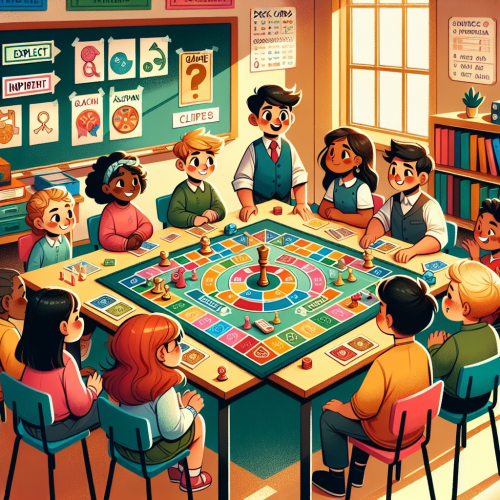
Students will collaborate with 3rd-grade peers to design and facilitate game-based learning sessions focused on identifying explicit and inferential information. This partnership will allow older students to practice effective communication and collaboration skills by teaching younger students how to play detective-themed board games. Through this interaction, both groups will enhance their social skills, with older students taking on leadership roles and younger students benefiting from peer mentorship.

Phase Outcomes

Phase Learning Outcome
Discover
I can identify the challenge of limited game-based learning opportunities and understand its root causes through engaging activities that spark curiosity and conviction about the importance of social skills development.
Examine
I can research the social and cognitive benefits of board games by analyzing texts and discussing with peers, connecting my findings to understanding how games enhance communication, inferential skills, and the ability to distinguish between explicit and implicit information.
Engineer
I can develop a plan to teach and facilitate a board game session with younger students, ensuring the experience is both educational and enjoyable, fostering social interaction, critical thinking, and the ability to make inferences.
Do
I can implement my game session plan by engaging with younger students, observing their interactions, collecting feedback, and assessing how well they identify explicit information and make inferences during gameplay.
Share
I can share my learning journey and the impact of my board game session by presenting to peers and school staff, reflecting on my personal growth in communication, collaboration, and the ability to interpret both explicit and inferential information.