All grades  Lesson 30 minutes

Simple Machines: First Grade Fun!

Suni C
K-2.AF.6.2
Self Directed Learning
Academic Mindset
Critical Thinking & Problem Solving
1-pager

Purpose

The purpose of this learning experience is to engage students in hands-on, collaborative exploration of simple machines, fostering critical thinking and problem-solving skills. Through building and testing prototypes, students will gain a practical understanding of forces and motion, while reflecting on their learning process to enhance self-directed learning. This project encourages students to explore their creativity, establish a sense of belonging, and develop an academic mindset by addressing real-world challenges through innovative approaches.

Learning goals

Students will collaboratively design and build simple machines using everyday and recycled materials, enhancing their understanding of basic physics concepts such as forces and motion. Through hands-on experimentation and iteration, students will develop critical thinking and problem-solving skills as they address real-world challenges. By engaging in self-directed learning, students will reflect on their processes and outcomes, using feedback to improve their designs and build self-awareness and confidence in their abilities.
Standards
  • [Next Generation Science Standards] K-2.AF.6.2 - Use tools and/or materials to design and/or build a device that solves a specific problem or a solution to a specific problem.
Competencies
  • Self Directed Learning - Students use teacher and peer feedback and self-reflection to monitor and direct their own learning while building self knowledge both in and out of the classroom.
  • Academic Mindset - Students establish a sense of place, identity, and belonging to increase self-efficacy while engaging in critical reflection and action.
  • Critical Thinking & Problem Solving - Students consider a variety of innovative approaches to address and understand complex questions that are authentic and important to their communities.

Products

Students will collaboratively design and construct a simple machine capable of transporting small items over a set distance. Using recycled and everyday materials, each group will create a prototype, test its functionality, and make necessary improvements. The final product will be showcased in a class demonstration, highlighting its efficiency and potential real-world applications in logistics and transportation.

Launch

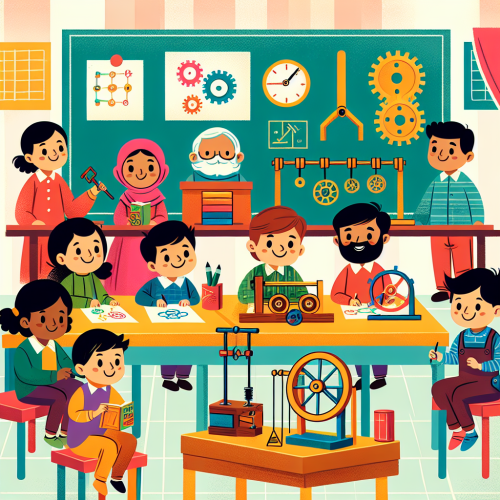
Kick off the learning experience with a 'Build-a-Thon' where students collaborate in small groups to create simple machines using everyday materials like cardboard, string, and plastic bottles. Set up interactive stations as part of a 'Machine Makers' workshop, allowing students to explore and experiment with different types of simple machines such as levers, pulleys, and wheels. Encourage students to share their creations and reflect on the problem-solving strategies they used, fostering a sense of community and belonging.

Exhibition

Host a "Simple Machines Showcase" where students present their constructed machines to classmates, teachers, and family members. Each group can demonstrate how their machine works, explaining the design process, challenges faced, and solutions found. Encourage students to engage with the audience by inviting them to test the machines and provide feedback, fostering a community of learning and celebration.