High School Grade  Project 3 weeks

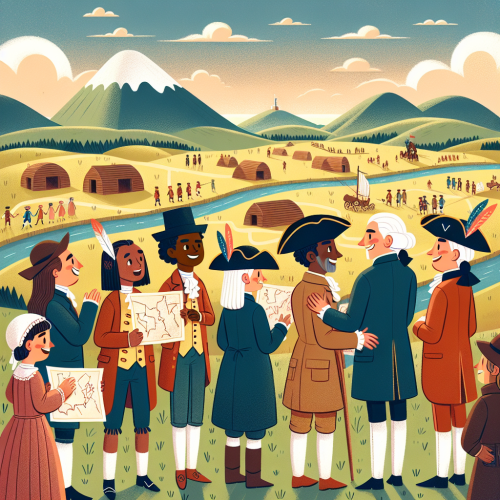
Revolutionary Roleplay: Founding Fathers' Dilemmas!

Hilary G
CCSS.Math.Content.HSG-SRT.B.4
TH:Cr2.HS3.a
ESS.3.B
TH:Re9.HS1.a
CCSS.Math.Content.HSF-IF.A.2
+ 5 more
1-pager

Purpose

The purpose of this learning experience is to immerse students in the complexities of post-Revolutionary War America, engaging them in critical thinking and problem-solving as they explore the political, social, and economic challenges of forming new states. By role-playing historical figures and analyzing primary sources, students will develop content expertise and effective communication skills. This project encourages self-directed learning and reflection, allowing students to connect historical events to their own sense of identity and place within their communities. To support sophomores with language-based learning disabilities, additional scaffolding will be provided through structured role-play scripts, guided analysis of primary sources, and visual aids to enhance comprehension and engagement.

Learning goals

Students will analyze the political, social, and economic impacts of the Revolutionary War on the formation of new states, utilizing primary source documents and artifacts with guided support. They will develop skills in historical interpretation and creative expression by drafting speeches or letters from historical figures' perspectives, with structured outlines and graphic organizers. Through scaffolded role-playing and reflective writing, students will deepen their understanding of the emotional and political complexities of post-war governance. They will enhance their communication skills by presenting their work in character at the 'Founding Fathers Forum' and engaging in critical discussions, with opportunities for practice and feedback. Students will also engage in self-directed learning by revising their work based on feedback and self-reflection, with additional check-ins and peer support.
Standards
  • [Common Core] CCSS.Math.Content.HSG-SRT.B.4 - Prove theorems about triangles.
  • [National Core Arts Standards] TH:Cr2.HS3.a - Develop and synthesize original ideas in a drama/theatre work utilizing critical analysis, historical and cultural context, research, and western or nonwestern theatre traditions.
  • [Next Generation Science Standards] ESS.3.B - Natural Hazards
  • [National Core Arts Standards] TH:Re9.HS1.a - Examine a drama/ theatre work using supporting evidence and criteria, while considering art forms, history, culture, and other disciplines.
  • [Common Core] CCSS.Math.Content.HSF-IF.A.2 - Use function notation, evaluate functions for inputs in their domains, and interpret statements that use function notation in terms of a context.
Competencies
  • Self Directed Learning - Students use teacher and peer feedback and self-reflection to monitor and direct their own learning while building self knowledge both in and out of the classroom.
  • Academic Mindset - Students establish a sense of place, identity, and belonging to increase self-efficacy while engaging in critical reflection and action.
  • Critical Thinking & Problem Solving - Students consider a variety of innovative approaches to address and understand complex questions that are authentic and important to their communities.
  • Content Expertise - Students develop key competencies, skills, and dispositions with ample opportunities to apply knowledge and engage in work that matters to them.
  • Effective Communication - Students practice listening to understand, communicating with empathy, and share their learning through exhibiting, presenting and reflecting on their work.

Products

Students will create a multimedia presentation that includes their drafted speeches or letters from historical figures, enriched with visuals and audio to convey the challenges of forming new states. To support students with language-based learning disabilities, provide templates and graphic organizers to help structure their speeches and essays. They will also produce a reflective essay from the perspective of their role-played historical figure, examining the emotional and political complexities of the era. These products will be showcased during the 'Founding Fathers Forum', where students will present in character and engage in a Q&A session with the audience.

Launch

Begin with a simplified 'Revolutionary War Escape Room' that includes visual aids and step-by-step instructions to accommodate language-based learning disabilities. Provide students with a glossary of key terms and historical figures to support understanding as they solve puzzles related to post-war governance and territorial issues. Encourage collaboration by assigning roles within groups, allowing students to leverage their strengths and practice effective communication and critical thinking in a supportive, engaging setting.

Exhibition

Students will participate in a 'Founding Fathers Forum' where they present their reflective essays in character, embodying the historical figures they have studied. To support students with language-based learning disabilities, provide graphic organizers and sentence starters to help them structure their presentations. During the forum, students will engage with an audience of peers, teachers, and community members in a dynamic Q&A session, with the option for pre-prepared questions to facilitate participation. This exhibition will also feature a multimedia presentation of their drafted speeches or letters, enhanced with visuals and audio elements, to provide a comprehensive understanding of the post-Revolutionary War challenges.