6th Grade  Project 1 week

Cardboard Creations: Cut, Craft, Conquer!

Mary P
D2.Eco.12.6-8
D2.Geo.12.6-8
D2.Civ.5.6-8
Self Directed Learning
1-pager

Purpose

The purpose of this learning experience is to immerse 6th-grade students in a dynamic, hands-on project that combines creativity, engineering, and sustainability. By transforming cardboard into innovative creations, students will develop critical thinking and design skills while understanding real-world economic, geographic, and civic concepts. Through collaboration with a local recycling center, they will gain insights into sustainable practices and the impact of recycling on communities, fostering a sense of responsibility and awareness of global issues.

Learning goals

Students will develop proficiency in using the chomp saw safely and accurately, enhancing their technical skills through hands-on practice. They will apply design thinking to create innovative cardboard products, integrating principles of engineering and aesthetics. Throughout the project, students will deepen their understanding of sustainable practices and the impact of recycling on the environment, while also exploring economic and civic concepts related to inflation, population distribution, and government structures. By engaging in self-directed learning, students will refine their ability to assess their progress, utilize feedback, and adapt their approaches to achieve their project goals.
Standards
  • [National Council for the Social Studies] D2.Eco.12.6-8 - Explain how inflation, deflation, and unemployment affect different groups.
  • [National Council for the Social Studies] D2.Geo.12.6-8 - Explain how global changes in population distribution patterns affect changes in land use in particular places.
  • [National Council for the Social Studies] D2.Civ.5.6-8 - Explain the origins, functions, and structure of government with reference to the U.S. Constitution, state constitutions, and selected other systems of government.
Competencies
  • Self Directed Learning - Students use teacher and peer feedback and self-reflection to monitor and direct their own learning while building self knowledge both in and out of the classroom.

Products

Students will create innovative cardboard products that address real-world issues, such as a sustainable packaging solution or an educational model demonstrating population distribution changes. Each product will incorporate engineering principles and artistic elements, showcasing students’ ability to blend functionality with aesthetics. By the end of the project, students will present their creations in a community exhibition, highlighting their problem-solving skills and understanding of sustainable practices.

Launch

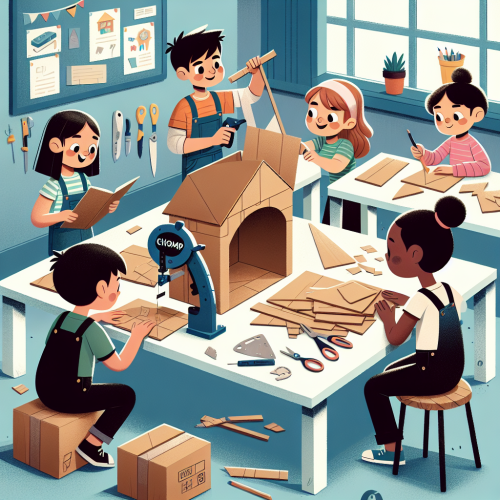
Kick off the project with a dynamic 'Sustainability Showcase,' where a guest speaker from the local recycling center shares insights on the lifecycle of cardboard and its impact on the environment. This interactive session will set the stage for students to explore the potential of cardboard as a sustainable material. Following the showcase, students will engage in a hands-on workshop to learn safe chomp saw techniques, preparing them to transform cardboard into functional, creative products.

Exhibition

Host a "Cardboard Creations Expo" where students present their projects to peers, teachers, and community members, highlighting the functionality and creativity of their designs. Each student will prepare a brief presentation explaining the real-world problem their creation addresses, the design process, and the sustainable practices they incorporated. Invite the guest speaker from the local recycling center to provide feedback and share insights on the importance of sustainability in design. Display informational posters that connect students' projects to the social studies standards, such as the impact of population distribution on land use and the role of government in promoting sustainable practices.