2nd Grade
Project
3 weeks
Shape Up Durango: Fraction City Fun!
CCSS.Math.Content.2.G.A.3
Productive Collaborator
1-pager
Purpose
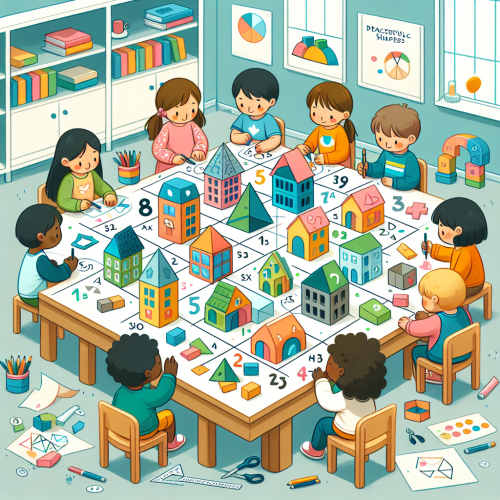
This project engages second-grade students in a hands-on exploration of geometry and fractions through designing and building mini city blocks. By integrating real-world applications and collaborative learning, students deepen their understanding of 2D and 3D shapes, partitioning, and geometric attributes. Using tablets or computers, students will create an interactive digital map of their city block, enhancing their technological skills and allowing them to showcase their designs and learning. The project fosters critical thinking, creativity, and communication skills as students work together to meet design criteria and share their learning with the community.
Learning goals
The learning goals for this project include understanding and applying the concepts of partitioning shapes into equal shares, using the language of fractions, and recognizing that equal shares can have different shapes. Students will develop skills in identifying and drawing various 2D and 3D shapes, and apply these skills to design and construct a mini city block. They will engage in collaborative problem-solving and critical thinking, using geometric concepts to meet specific design criteria. Additionally, students will enhance their communication skills by sharing their designs and receiving feedback, fostering a deeper comprehension of how geometry is used in real-world city planning. To create a digital map, students will use tablets or computers, integrating technology to showcase their understanding of shapes and fractions in an interactive format.
Standards
- [Common Core] CCSS.Math.Content.2.G.A.3 - Partition circles and rectangles into two, three, or four equal shares, describe the shares using the words halves, thirds, half of, a third of, etc., and describe the whole as two halves, three thirds, four fourths. Recognize that equal shares of identical wholes need not have the same shape.
Competencies
- Productive Collaborator - Engages with others to achieve a common goal through building positive relationships, actively listening, showing empathy, and making individual contributions to a larger group.
Products
Students will create a miniature city block model using recycled materials, incorporating a variety of 2D and 3D shapes, and partitioned sections to demonstrate their understanding of fractions, including thirds and fourths. Additionally, they will design an interactive digital map of the city block using tablets or computers, allowing users to click on different sections to learn about the shapes and fractions employed in each part of the design. These products will culminate in a 'City Builders Expo,' where students showcase their models and digital maps to the community, highlighting their geometric and collaborative skills.
Launch
Begin with a 'Shape Safari' where students explore the school grounds or a nearby park to identify and sketch different 2D and 3D shapes, noting any fractions they observe in the environment. Follow this with a 'Design Your Dream City' brainstorming session, where students draw their ideal city block on paper, integrating various shapes and fractions. Encourage students to share their designs with peers, fostering a collaborative atmosphere that sets the stage for creating a digital map of their city block using tablets or computers.
Exhibition
Transform the classroom into a vibrant 'City Builders Expo,' where students proudly display their miniature city block models, each showcasing diverse 2D and 3D shapes and partitioned sections. Invite parents, teachers, and community members to explore the models, encouraging students to explain the geometric concepts and fractions, including third-grade level fractions, they applied in their designs. Set up interactive stations where visitors can engage with digital maps created using tablets or computers, offering insights into the creative process and the mathematical principles behind each city block.
Plan
| Week 1 |
Day 1
|
Day 2
|
Day 3
|
Day 4
|
|---|---|---|---|---|
| Activities |
Shape Safari Exploration - Students go on a 'Shape Safari' around the school grounds to identify and sketch different 2D and 3D shapes they observe in their environment. (20 min)
Dream City Design Brainstorm - Begin the 'Design Your Dream City' session where students draw their ideal city block on paper, incorporating various shapes and fractions. (20 min)
|
Introduction to Fractions - Discuss partitioning shapes into halves, thirds, and fourths using circle and rectangle cutouts. Students practice with paper folding and cutting. (20 min)
Fraction Sharing and Reflection - Students partner up to share their cutouts, describing the partitions using fraction vocabulary such as 'halves' and 'thirds'. (20 min)
|
Polygon Identification - Interactive group session where students learn to identify and draw polygons such as triangles, quadrilaterals, and hexagons. (20 min)
City Block Blueprint Drawing - Using grid paper, students start designing blueprints for their city blocks, integrating newly learned polygons and fractions. (20 min)
|
Building with 3D Shapes - Hands-on activity where students use modeling clay to create 3D shapes like cubes and pyramids, discussing attributes like faces and edges. (20 min)
Collaborative Design Session - Students work in small groups to combine their 3D shapes into preliminary models for their city blocks, fostering teamwork and idea sharing. (20 min)
|
| Deliverables |
1. Sketches of 2D and 3D shapes found during the 'Shape Safari'.
2. Initial drawings of students' dream city blocks, incorporating a variety of shapes and fractions. 3. Models of 3D shapes created using building blocks or modeling clay. 4. Completed partitioning exercises demonstrating understanding of halves, thirds, and fourths. |
|||
| Preparation |
1. Gather sketchbooks or drawing paper for students to use during the 'Shape Safari'.
2. Prepare clipboards and pencils for outdoor exploration. 3. Collect building blocks or modeling clay for 3D shape exploration. 4. Provide rulers and grid paper for partitioning activities. 5. Create a list of guiding questions for the brainstorming session to help students think critically about their designs. |
|||
| Week 2 |
Day 5
|
Day 6
|
Day 7
|
Day 8
|
|---|---|---|---|---|
| Activities |
Exploring Shape Attributes - Guide students in identifying and describing the attributes of various 2D shapes, such as sides and angles, using physical shape manipulatives. (20 min)
Fraction Art Activity - Students use paper and art supplies to create visual representations of shapes partitioned into halves, thirds, and fourths, reinforcing their understanding of fractions. (20 min)
|
3D Shape Building Challenge - Facilitate a hands-on activity where students use building blocks to construct different 3D shapes, discussing the number of faces, edges, and vertices. (20 min)
Collaborative City Block Sketching - In small groups, students sketch preliminary city block designs, incorporating a mix of 2D and 3D shapes they've explored. (20 min)
|
Blueprint Refinement and Fractions - Students refine their city block blueprints on grid paper, ensuring accurate partitioning of shapes into fractions and incorporating feedback from peers. (20 min)
Peer Feedback Exchange - Organize a session where students present their blueprints to peers for constructive feedback, focusing on shape accuracy and creativity. (20 min)
|
Interactive Feedback Stations - Set up stations where students receive and give detailed feedback on their city block models, considering shape use and fraction application. (20 min)
Final Blueprint Adjustments - Allow time for students to make final adjustments to their blueprints based on peer feedback, preparing for next week's model-building phase. (20 min)
|
| Deliverables |
1. Complete a blueprint of the city block design, clearly labeling polygons and partitioned sections with fractions.
2. Build a prototype of the city block model using recycled materials, incorporating different 2D and 3D shapes. 3. Develop a collaborative city map, each student contributing a section with labeled geometric attributes and fractions. 4. Create a reflection journal entry documenting progress, challenges, and application of shapes and fractions. 5. Receive feedback from peers during 'Feedback Circles' and make revisions to city block designs. 6. Prepare for a presentation of city block models and digital maps during the Gallery Walk, incorporating peer feedback. |
|||
| Preparation |
1. Gather recycled materials for building city block models, ensuring a variety of shapes are available (e.g., cardboard, plastic containers, fabric).
2. Prepare grid paper and rulers for partitioning exercises and blueprint creation. 3. Set up tablets or computers with digital map software for students to design interactive maps. 4. Arrange for city planners to visit and discuss the real-world application of geometry in city planning. 5. Create a feedback circle schedule and setup for the weekly critique sessions. 6. Print reference sheets with examples of polygons, 3D shapes, and fraction partitioning for student use. 7. Organize interactive workshops with materials to measure angles and count sides. |
|||
| Week 3 |
Day 9
|
Day 10
|
Day 11
|
Day 12
|
|---|---|---|---|---|
| Activities |
Final City Block Model Assembly - Students finalize their miniature city block models using recycled materials, focusing on incorporating a variety of 2D and 3D shapes and ensuring partitioned sections demonstrate understanding of fractions. (20 min)
Interactive Digital Map Design - Using tablets or computers, students begin creating interactive digital maps of their city blocks, detailing the shapes and fractions used in each section. (20 min)
|
Feedback and Revision Workshop - Conduct a 'Feedback Circle' where students present their city block models to peers and receive constructive feedback focused on shape accuracy, partitioning, and creativity. Allow time for revisions. (20 min)
Digital Map Enhancement - Students refine their digital maps based on feedback, ensuring clear representation of geometric concepts and fractions applied in their designs. (20 min)
|
City Builders Expo Setup - Transform the classroom into a 'City Builders Expo' space, where students arrange their city block models and digital maps, preparing for the presentation to the community. (20 min)
Final Presentation Rehearsal - Students practice explaining the geometric concepts and fractions used in their city block designs, enhancing communication skills for the upcoming expo. (20 min)
|
City Builders Expo - Host the 'City Builders Expo,' where students showcase their city block models and digital maps to parents, teachers, and community members, answering questions and receiving external feedback. (40 min)
|
| Deliverables |
1. Completed miniature city block model incorporating various 2D and 3D shapes and partitioned sections.
2. An interactive digital map showcasing the class's city block project with descriptive elements about the shapes and fractions used. 3. Presentation of individual models and digital maps during the City Builders Expo. 4. Reflection journal entries summarizing students' learning experiences and the application of geometric concepts and fractions in their projects. |
|||
| Preparation |
1. Gather tablets or computers for students to use in creating the interactive digital maps.
2. Prepare materials for final touches on city block models, such as paint, markers, and adhesives. 3. Set up the classroom for the City Builders Expo, including tables for model displays and areas for digital map presentations. 4. Coordinate with community partners and invite city planners to the expo. 5. Ensure all students have access to their reflection journals for the final reflection activity. |
|||