Initial ideas
Science / NGSS (3-LS4-3, 3-LS4-4, 3-ESS3-1)
Students will identify a real-world environmental or social problem in the country they selected.
Students will research how people, plants, or animals are affected by the problem.
Students will design a simple model that shows a solution to help people, animals, or ecosystems.
Students will explain how their model helps reduce the negative impact of humans on the environment or community.
Social Science (Geography, Communities, Economics)
Students will locate their country on a world map and describe what it is like.
Students will explain how people in the country use natural resources (land, water, animals).
Students will describe how a problem in that country affects the community (poverty, pollution, endangered species, etc.).
Students will explain how their solution can help people or the environment.
Reading Standards (RI.3 and SL.3)
Students will read informational texts about their country and SDG to collect facts.
Students will take notes using simple charts, diagrams, or graphic organizers.
Students will use text features (maps, pictures, headings) to find information.
Students will share information clearly in group discussions and presentations.
Writing Standards (W.3.1, W.3.2, W.3.3, W.3.7, W.3.8)
Students will write an informational piece explaining the SDG, the country, the problem, and the solution.
Students will write an opinion piece about why their solution is important.
Students will write a narrative story from the point of a person, animal, or object affected by the problem.
Students will revise and edit their writing for clarity.
Students will use facts, details, and examples from their research.
Objectives for Each SDG Focus
Goal 1 – No Poverty (SDG 1)
(Connected Standards: Economics; NGSS 3-ESS3-1; RI.3; W.3)
Student Objectives
I can describe what poverty means and its impact on people in my chosen country.
I can identify reasons why some communities lack sufficient food, water, shelter, or financial resources.
I can find a solution that helps families meet their basic needs.
I can develop a model that illustrates how my solution will help alleviate poverty.
I can write an informational explaining the problem and the solution.
Goal 14 – Life Below Water (SDG 14)
(Connected Standards: NGSS 3-LS4-3, 3-ESS3-1; Geography; RI.3; W.3)
Student Objectives
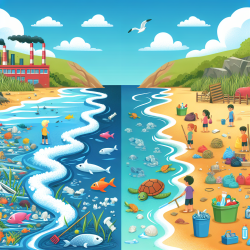
I can explain a problem affecting oceans, lakes, rivers, or sea creatures in my country.
I can describe how pollution, overfishing, or climate change harms underwater life.
I can design a model that shows a solution to protect underwater habitats.
I can write an opinion piece explaining why people must protect life under water.
I can use text features to find information about marine animals and ocean health.
Goal 15 – Life on Land (SDG 15)
(Connected Standards: NGSS 3-LS4-3, 3-LS4-4; Geography; RI.3; W.3)
Student Objectives
I can identify a problem that affects land animals, forests, or plants in my country.
I can explain how deforestation, pollution, or habitat loss harms living things.
I can design a model that illustrates how to protect a land-based ecosystem.
I can write a narrative story from the point of view of an animal impacted by the problem.
I can explain how humans can change behavior to help nature survive.
Final Project Demonstration Objectives
By the end of the project, students will:
Show their model and explain what problem it solves.
Present their writing (informational, opinion, and narrative) to show understanding of their SDG.
Explain how their solution helps people, animals, or the environment.
Work cooperatively in a group to research, plan, build, and present.
Use academic vocabulary related to their SDG (habitat, resource, poverty, pollution, ecosystem, etc.).